Water Leak From the Apartment Above in Dubai: Who Pays and What to Do First
What to do in the first 60 minutes
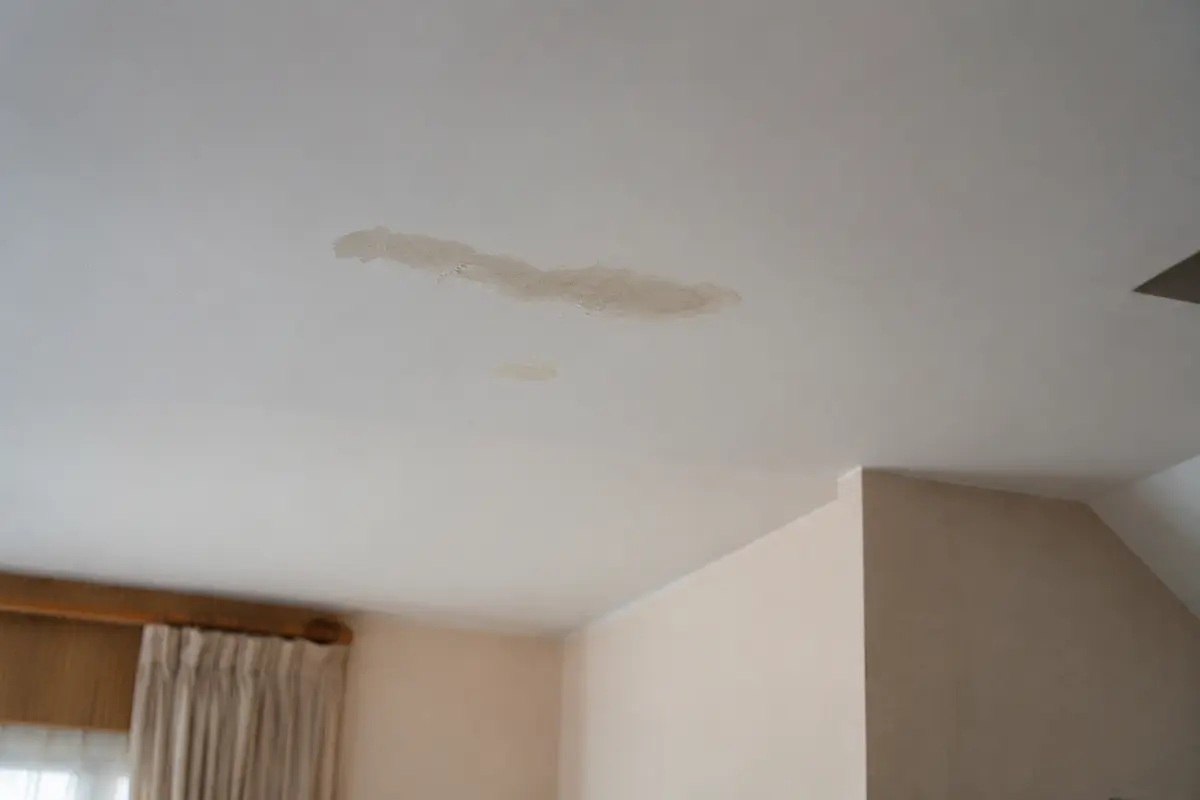
A stain blooming across the ceiling, a drip pattering into a saucepan on the sofa — the instinct is to climb on a chair and poke at the plasterboard. Resist that. The next hour is about evidence and safety, not repair.
Start with your phone. Photograph and video the affected ceiling, walls, floor, and any soaked furniture, with the timestamp visible on your lock screen in at least one shot. Open the camera, lock the screen, photograph the screen showing the time, then keep recording the damage. The first hour is when the evidence is freshest and least disputable.
Then triage safety. If water is dripping near a downlight, ceiling fan, or wall socket, do not touch the fitting and do not stand directly under it. Walk to the consumer-unit panel by your front door and trip the relevant lighting or socket circuit before placing buckets. Water meeting live wiring is the one reason a routine leak becomes a Dubai Civil Defence call on 997 — and the 30-second walk to the panel is what stops that escalation.
With the circuit dead, place vessels under the drip, move electronics and rugs clear, and lift soft furniture onto something hard. Towels around the perimeter slow lateral spread into skirtings.
Now go up. Knock on the door directly above yours. If no one answers, ring the building's security or concierge desk and ask them to attempt contact. In many Dubai towers, security can reach the registered occupant where you cannot. The ask is small: shut off the apartment's main stop-cock until a plumber attends. Most internal leaks stop the moment water supply to that flat is isolated.
While that happens, log the incident with your building's FM portal. Most managed Dubai buildings use an online ticketing system, and the ticket number is your timestamped proof that the building was notified. Notify your own landlord in writing the same hour, attaching the photos. A short, factual message with the ticket number protects you from later "you should have told me sooner" arguments.
Two things you should not do in this first hour. Do not cut into wet plasterboard or pull down a sagging section of ceiling yourself — loss adjusters want the damage intact, and a tenant who has DIY-demolished evidence has a harder claim. And do not haul wet contents to a bin chute before they are photographed in situ. The damage to your sofa is part of the loss; binned, it stops being.
How Dubai's law splits liability between the unit, the building, and the Owners Association
Most Dubai apartment buildings are governed by the framework set out in Dubai's Jointly Owned Property Law — originally Law 27 of 2007, updated by Law 6 of 2019. The same statute sits behind the Owners Association at your building and the annual service charge owners pay.
The distinction that matters for a leak is between an individual unit's plumbing and the building's common areas. Pipework serving only one flat (the cold and hot feeds inside the apartment, the waste runs from sinks and toilets to the point they join the main stack, the flexible hoses behind appliances) belongs to that unit and is the unit owner's responsibility. Pipework running vertically through the building and serving multiple flats (the riser stacks, the main drainage runs, structural pipes cast into the concrete floor) is part of the common areas, with funds administered via the Mollak platform.
A burst flexible hose under the upstairs kitchen sink is the upstairs unit's problem. A failed joint in the building's shared cold-water line passing through the floor structure between you and the flat above is the building's problem, paid from the service-charge fund.
For you, the downstairs tenant, neither of those is your bill. Your landlord's obligations under the tenancy contract usually cover making good the damage inside the unit you rent, and the at-fault party (upstairs owner, the building, or their insurers) reimburses your landlord. The exception is contents: your sofa, your laptop, the rug you bought yourself. Those are personal property and travel with you, not with the lease.
When your upstairs neighbour (or their landlord) is on the hook
The most common cause of a downstairs ceiling drip in Dubai apartments is a failure inside the unit upstairs. Worn silicone around a shower tray. A washing machine hose that has worked itself loose. A bath overflow that the occupant did not notice. A toilet seal that failed at the floor flange. None of these are common-area issues, and none of them are your problem to fix.
Who specifically pays depends on cause. If the failure is wear-and-tear of installed fixtures (a developer-installed mixer tap that has aged out, a hose that perished) liability sits with the upstairs owner, who is also the party responsible for repairing damage to your apartment. If the cause is misuse by the upstairs tenant (bath left running, washing machine connected incorrectly, deliberate behaviour) the tenant carries the cost, often through their landlord's recovery action. The principle is plain: liability sits with the owner of the unit where the problem originated, and your route to that owner runs through the building management office, which can identify the registered party from internal records when you cannot.
Insurance is the quiet lever here. Many landlords carry building or landlord insurance with a third-party liability section, and that policy will often pay your damage even before liability is formally agreed, then chase recovery from the upstairs party. If you hold contents insurance of your own, your laptop and sofa can be claimed under that policy without waiting for the upstairs dispute to resolve. Tenants forget contents cover exists; for a unit furnished by the occupant, it is one of the cheaper risk-management decisions available.
This kind of failure is not exotic. It sits alongside other common Dubai apartment plumbing failures any tenant should be loosely familiar with before signing.
When the building (not your neighbour) picks up the bill
Switch to the common-area case. If the source is not inside a single unit but in a shared system (a corroded joint in a vertical riser, a failure in the main drainage stack, a leak inside the floor structure from a pipe serving multiple flats, water ingress from the roof or external building envelope) the building carries both the source repair and the consequential damage to your ceiling.
That responsibility is funded by the service charges unit owners pay each year. In practice, you do not deal with the building's committee of owners directly. You deal with the appointed management company or facilities team, which acts on the committee's behalf for day-to-day maintenance.
Tenants miss this distinction often. They knock upstairs, find a sympathetic neighbour, and stop the trail there, even when the upstairs occupant has no idea where the water is coming from because it is not inside their unit either. Two signs the issue is likely common-area: the drip continues after the flat above has shut off its main stop-cock; or the staining follows the line of a structural column or wet-area boundary rather than a single fixture above.
When the building covers the cost, repairs come out of the shared maintenance fund or the master insurance policy. That is one reason serious leaks involving structural pipework or external envelope failures can take longer to resolve: loss adjusters, contractor procurement, and committee budget sign-off all sit in the chain.
Grey-area cases: slab pipes, chilled-water condensate, balcony drains
Two specific Dubai grey areas come up enough to flag.
The first is district cooling. In buildings served by a central chilled-water plant, each apartment has its own fan-coil units fed from a shared loop. A failure in the chilled-water main, in its vertical run, or in the slab-routed section is the building's responsibility. A condensate-drain blockage inside a specific fan-coil, where the water dripping is actually condensate (not supply water) and the drain pan has overflowed inside the flat above yours, sits with the upstairs unit. The give-away with condensate is that the water is clean, cool, and tied to AC running hours; supply leaks run regardless of whether the AC is on.
The second is balconies and external drains. A blocked balcony drain on the floor above that overflows during the brief winter rain or a wash-down session, then tracks through the floor structure and into your ceiling, is messy on liability. The drain itself is usually a common-area service, but the obligation to keep it clear of occupant debris (cigarette ends, sand) often falls on the upstairs tenant. Expect the building's maintenance team and the upstairs party to argue about this one; document carefully.
A rarer sub-case worth knowing: a leak from a cold-water main inside the concrete deck that connects to the building's storage tank on the roof. Tank cleaning falls under Dubai Municipality oversight for some property categories, but a pipe failure between tank and apartment is unambiguously a common-area issue. If the building's maintenance team is slow to attribute it correctly, push back politely; the Strata Law is clear on shared pipework.
What to do if no one will pay: tribunal and regulator escalation
Most of these cases resolve at the building-management level once the source is established and the right insurer is identified. When they do not, the escalation depends on who is refusing.
If your own landlord is refusing to make good the damage inside your apartment, that is a tenancy dispute. Send a written notice giving a reasonable timeframe to act (7 to 14 days is standard for non-emergency repairs) and keep your photos, the maintenance ticket number, and any correspondence. If the landlord still refuses, file with the Rental Disputes Centre (RDC), the judicial body established under Dubai Decree 26 of 2013 and based at the Dubai Land Department. Cases route to arbitration first, with a target of around 15 days for an initial outcome, and filing fees are capped at a percentage of annual rent. You will need your Ejari-registered tenancy contract, your ID, and the evidence pack you have been building since the first hour.
If the upstairs owner or their occupant is refusing, and the source has been confirmed inside their unit, the route differs. The tribunal handles landlord-tenant disputes, not strictly neighbour disputes. For neighbour-versus-neighbour or against another owner, you escalate via building management to the building's committee, and if needed through RERA's owners-association department. In practice, getting the upstairs owner's insurer involved through the building is usually quicker than chasing legal action.
If the building itself is refusing (rare, but it happens where the bill is large) keep documenting through the maintenance portal, request the committee minutes that show how your case was handled, and lodge a complaint with the regulator's jointly-owned-property team. A written paper trail is what makes these complaints stick.
Two final habits worth building before you ever need them. Make sure you documented your move-in condition properly; a baseline of an undamaged ceiling at the start of the lease is hard to argue with. And learn the warning signs that your wiring is under stress if a leak ever does saturate a ceiling near a light fitting; tripping circuits and discolouration around a downlight are not safe to ignore.
Frequently asked questions
Who pays if water leaks from the apartment above in Dubai?
The party responsible for the source pays. If the failure is inside the upstairs flat (a worn hose, a leaking shower seal, an overflowed appliance) the upstairs owner pays, with the upstairs tenant carrying the cost only if misuse caused the failure. If the source is a shared vertical line, a pipe routed through the concrete deck, or the external envelope, the building covers it through service-charge funds or its master insurance. As the downstairs tenant, you are almost never out of pocket for the repair itself.
Can I refuse to pay rent until my ceiling is fixed?
No. Withholding rent in Dubai is treated as a separate breach and can put your tenancy at risk even when the underlying complaint is valid. The correct route is written notice to your landlord, a reasonable repair window, and escalation to the rental tribunal if they refuse. Keep paying rent on schedule and pursue the repair issue as a parallel formal complaint, not as leverage. The tribunal will treat your case more favourably if your own obligations are clean.
Does home insurance cover water damage from a neighbour in the UAE?
It can, on two layers. Your own contents insurance covers your possessions (laptop, sofa, clothes) regardless of who caused the damage, and pays out without waiting for the upstairs dispute to resolve. Your landlord's building or landlord policy typically covers the apartment's structural and finishing repairs and may include third-party liability, which lets the insurer pursue recovery from the at-fault upstairs party. Many tenants discover they have neither cover until the day they need it.
How long does the tribunal take to resolve a case?
The published target is around 15 days for the initial arbitration stage, where the centre attempts an amicable settlement. If arbitration fails, the case moves to a formal first-instance hearing, which typically adds several weeks. Appeals add more time. Realistically, plan for a few weeks to a couple of months from filing to a usable outcome: faster if your evidence pack is complete, slower if either party requests adjournments.
What should I do if my upstairs neighbour ignores the leak?
Escalate through the building, not directly. Log the issue with the FM team and ask them to contact the registered owner of the upstairs unit on your behalf; the building has access to records and a duty to act when one unit's condition is damaging another. If the response is slow, write to the building management office. Keep your written communications brief and factual, and never let more than a few days pass without a follow-up that adds to the timestamped record.
Booking a plumber on Everlook
Quotes for water-damage work vary widely across Dubai. The spread between a half-day drying-out with ceiling repaint and a full re-plaster with associated pipe replacement upstairs is larger than most tenants expect. Apartment size, the age and accessibility of the affected pipework, whether the building requires a specific approved-contractor list, and how quickly drying needs to start all push the number. Everlook lets you compare offers from licensed UAE plumbing contractors side-by-side before you commit, with no obligation, so you can match the scope to the actual damage rather than to the loudest quote.
If your landlord is arranging the repair, Everlook is still useful for the upstream investigation: the leak-detection visit that decides whose pipe failed, before anyone signs off on the makegood scope. You can find a vetted plumbing contractor for that diagnostic visit directly.
Find your next pro on Everlook
Compare licensed contractors in your area in under a minute. Free to post, no signup needed to browse.
Find your next pro on Everlook
Post a job in minutes and get offers from trusted local contractors. Free to start.
Get started