Blocked or Smelly Drains in Dubai Apartments: What to Try and When to Call a Plumber
First, check these in 60 seconds
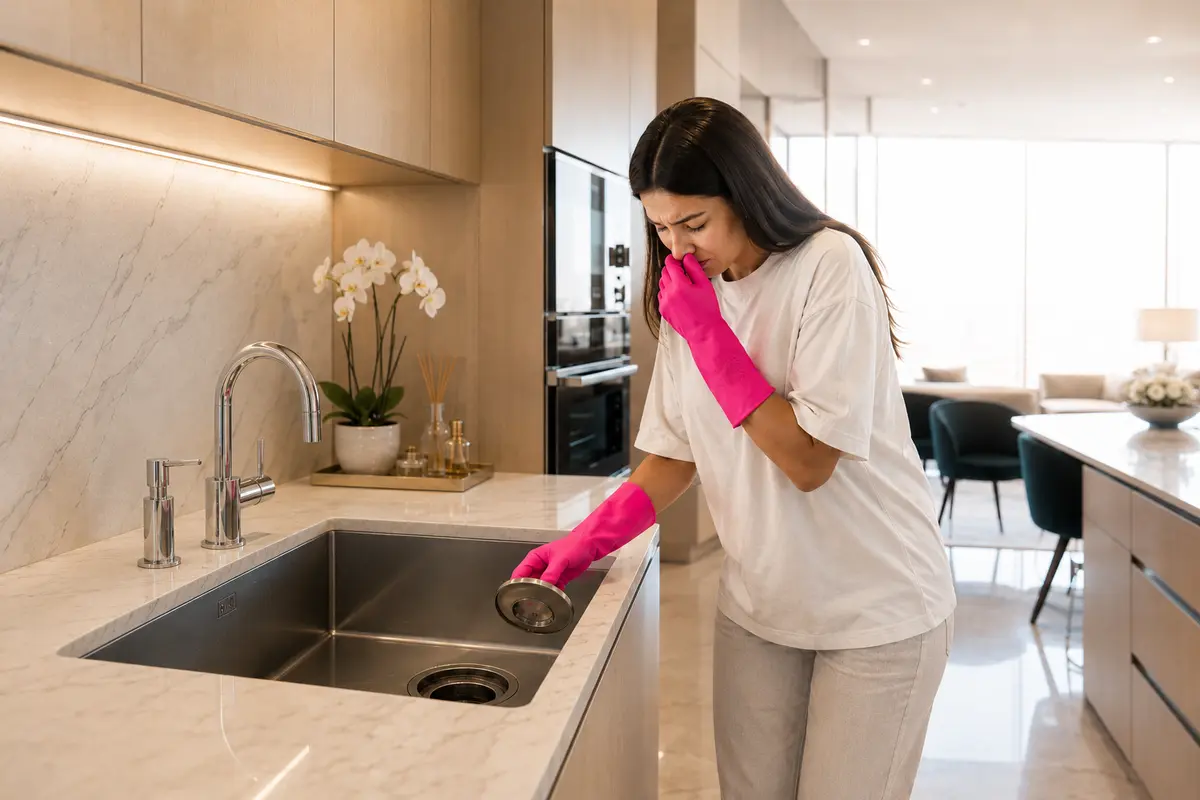
A drain that smells of rotten eggs usually points to a dry U-bend trap, not a sewer disaster — and most slow drains in a Dubai apartment start as hair or grease, not structural failure. Two quick tests rule out the most common causes before you assume the worst.
If the smell is the problem, run the tap or shower for about 60 seconds. Each fixture sits above a U-bend trap (also called a P-trap), a curved length of pipe that holds a small plug of water. That water seal is the only thing stopping sewer gas from rising into the room.
In a little-used guest bathroom, the trap simply dries out. The water evaporates over a couple of weeks, the seal breaks, and the smell follows. Running water refills it. Did the smell fade within an hour? It was a dry trap, and you are done.
If a drain is slow, fill the basin, then pull the plug and watch. Water that swirls away cleanly points to a one-off snag. Water that hovers and gurgles points to a partial plug building up inside the pipe — keep reading.
If it smells: a dry trap or a starved gulley
The rotten-egg odour is hydrogen sulphide, a gas produced as waste breaks down in the drainage system. The human nose detects it at extremely low concentrations, well below 1 part per million, so even a slightly broken water seal becomes obvious fast. Public-health bodies note the smell appears at fractions of a part per million, which is why a dry trap is so noticeable.
The usual suspect is a fixture you rarely touch. A guest shower, a second-bathroom basin, or a floor gulley, the grated drain set into the bathroom floor. They all rely on the same trap principle. Run them seldom and the seal evaporates, especially in humid kitchens and warm pipes where evaporation never quite stops.
The floor gulley that nobody uses
Floor gulleys are the quiet culprit. Many Dubai bathrooms have one, and if you shower elsewhere it can sit dry for weeks. Tip a jug of water into it once a fortnight and the smell stays away.
If you have run every trap, waited a day, and the sewage smell is still there, or it seems to come from a wall rather than a drain opening, that is a different problem covered further down.
If it drains slowly: hair, soap scum, or grease
A slow drain is almost always a narrowing, not a full stop. The mechanism depends on which room you are in.
Bathroom basins and showers: a hair-and-soap plug
In a bathroom, shed hair catches on the pipe wall and binds with soap scum into a slimy biofilm. A standard 50 mm waste pipe loses diameter month by month as the mat thickens, until water can only trickle past. The plug is physical, and dissolving it rarely works, because the core is matted hair.
Kitchen sinks: congealing fats and oils
Kitchen drains clog differently. Warm cooking fat, oil, and grease pour away as liquid, then cool and congeal on the pipe wall. Each wash adds a layer. This is also why pouring oil down a kitchen sink is a slow way to wreck the shared drains for the whole stack.
The Dubai factor: hard water on the inside of the pipe
There is a local contributor worth naming once. Dubai's mains supply is hard water, high in calcium and magnesium, so scale gradually lines the inside of pipes and fixtures, the same chalky deposit you see on a showerhead. A pipe already narrowed by scale clogs faster when hair or grease arrives. Those dissolved minerals are what harden into the scale over time.
Safe fixes a tenant can try
If one fixture is slow and nothing else in the apartment is affected, these are reasonable to attempt yourself. Work through them in order and stop the moment water starts backing up rather than draining.
Refill the trap and plunge
For a smell, refill the trap first, as covered above. For a slow drain, a cup plunger is the gentlest tool. Block any overflow opening with a damp cloth, seal the plunger over the drain, and pump firmly a dozen times. The pressure shifts a soft plug without touching the pipe walls.
Near-boiling water and washing-up liquid for grease
For a sluggish kitchen sink, pour in a squeeze of washing-up liquid, then a kettle of near-boiling (not fully boiling) water. Keeping it just off the boil protects plastic traps, which can soften under sustained heat. The detergent and heat re-liquefy congealed fat so it flushes through.
A bicarbonate-of-soda and vinegar soak
Half a cup of bicarbonate of soda followed by half a cup of white vinegar, left to fizz for an hour and chased with hot water, helps lift soap scum and light organic film. It will not clear a solid hair plug, but it freshens a drain that is starting to smell.
Pull the hair out with a drain hook
For a bathroom plug, a flexible plastic drain hook or a small snake is the most effective fix. Feed it in, hook the hair mat, and pull it up and out. The key word is up — pulling the blockage toward you removes it, whereas pushing only packs it tighter downstream.
Why to skip caustic chemical drain cleaners
It is tempting to reach for a bottle of caustic drain cleaner. In an apartment you do not own, that is usually the wrong call.
These products work by generating heat and corrosive reactions. That heat can warp plastic traps and weaken the rubber seals and joints that developers tend to install in volume, and the damage often shows up months later as a leak, not immediately. In a small, humid bathroom the fumes are hazardous, and if a caustic product sits on a stubborn plug and you then plunge, it can splash back. Most plumbers advise against routine caustic use for these reasons.
If a plunger, hot water, and a hook have not cleared it, the blockage is past what a tenant should be forcing. That is the point to get a professional view rather than escalating the chemistry. You can compare licensed options through Everlook's vetted plumbing contractors without committing.
When to stop and call a licensed plumber
Some signs mean the problem is no longer your trap, and DIY can make it worse. Treat any of these as a stop sign.
More than one fixture backs up at once
If the kitchen sink, the bathroom basin, and the shower all slow or back up together, the blockage is almost certainly in the shared riser stack that serves your column of apartments — not in any single trap. A shared-stack blockage is a building matter, so report it to your building's facilities management (FM) team rather than attacking it yourself.
Wastewater rising up through a shower tray or gulley
Dirty water coming up through a shower drain or floor gulley means waste from elsewhere in the building has nowhere to go and is pushing back into your apartment. Stop using water at every fixture and call for help. This is a stack-level problem, and continuing to run taps adds to the backup.
A sewage smell that seems to come from a wall
A persistent sewage odour that you cannot trace to any drain opening, one that feels like it is seeping from a wall or floor cavity, can mean wastewater has escaped a hidden pipe. That needs a plumber with the tools to locate it before it damages the structure. Dubai Municipality is the authority responsible for the city's public sewerage network, while what happens inside your apartment is between you, your landlord, and the building.
The same drain blocks more than twice in a few months
A drain you have cleared two or three times in recent months is telling you the real obstruction is deeper than a hook can reach. Repeat blockages usually need a plumber to clear the line properly with the right equipment, rather than another round of DIY.
A note on who pays
Whether the bill falls to you or the landlord depends on your tenancy contract and the cause. As a rough guide, a blockage a tenant created (hair in the trap, the wrong things flushed) usually sits with the tenant, while a shared-stack failure or a structural drainage fault usually falls to the landlord or building. UAE tenancy law generally splits routine upkeep from major repairs along those lines, but the contract wording governs, so read yours before assuming. For the wider context, the guide to recurring apartment plumbing faults is worth a read, and if water is appearing from above you, see what to do when there is a leak from the unit upstairs.
Frequently asked questions
Why does my bathroom smell like sewage even though the drain is clear?
The most likely cause is a dried-out trap in a fixture you rarely use, such as a guest basin or a floor gulley. The water seal that blocks sewer gas has evaporated, letting hydrogen sulphide rise into the room. Run that fixture for about 60 seconds, or tip a jug of water into the gulley, and the smell should fade within an hour.
Is it safe to use chemical drain cleaner in a rented Dubai apartment?
It is generally not advisable. Caustic cleaners generate heat that can warp plastic traps and weaken developer-installed seals, with leaks often appearing months later. In a confined, humid bathroom the fumes are hazardous. For a rental, a plunger, near-boiling water, or a drain hook is safer, and a licensed plumber is the right next step if those fail.
What does it mean if more than one drain backs up at the same time?
Multiple fixtures backing up together usually points to the shared riser stack serving your line of apartments, not your own traps. This is a building-level blockage, not a DIY job. Stop running water, avoid plunging, and report it to your building's facilities management team so they can clear the shared line.
How can I stop my drains from blocking and smelling again?
Run little-used fixtures and pour water into floor gulleys every couple of weeks to keep traps sealed. Fit a hair strainer over bathroom drains, and never pour cooking fat or oil down the kitchen sink. Because the local mineral-rich supply leaves scale inside pipes, an occasional hot-water and detergent flush helps keep the bore clear.
Can a tenant be charged for a blocked drain?
It depends on the cause and your tenancy contract. A blockage a tenant caused, such as a hair plug or flushed wipes, usually sits with the tenant, while a shared-stack or structural drainage failure usually falls to the landlord or building. Check your contract wording and document the problem before any work is done.
Booking a plumber on Everlook
Drain problems compound quietly. A trap you keep clearing or a stack that backs up once becomes a recurring odour, a damaged seal, or wastewater in a wall cavity if it is left to drift through the summer. Everlook connects you with licensed UAE plumbing contractors — verified credentials, transparent quotes, and reviews from real Dubai customers, so you can fix the cause once instead of patching the symptom.
Find your next pro on Everlook
Compare licensed contractors in your area in under a minute. Free to post, no signup needed to browse.
Find your next pro on Everlook
Post a job in minutes and get offers from trusted local contractors. Free to start.
Get started