Smart Home and Security in a Dubai Rental: What You Can Install and What Needs Permission
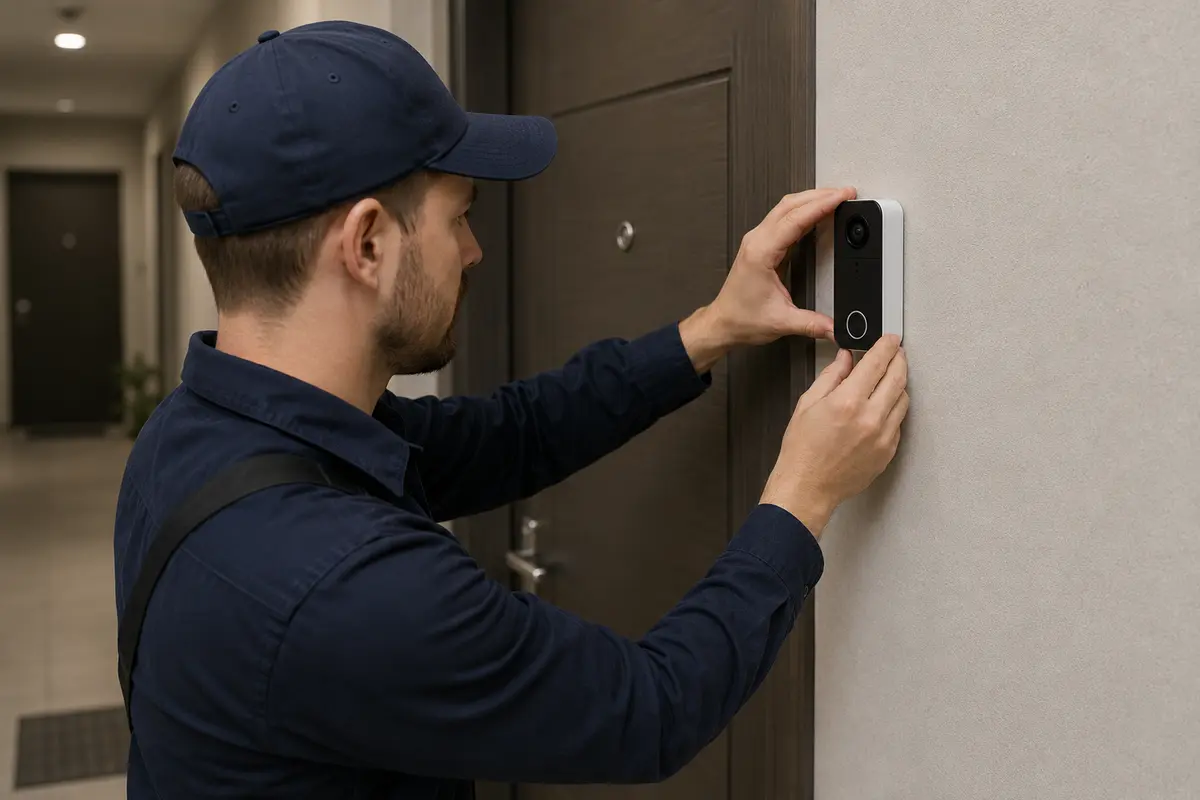
The default rule for modifications in a UAE rental
Here is the headline answer: if a device is reversible and leaves no mark, you can usually fit it yourself; if installing it alters the property — a drilled hole, a swapped lock, a wire tapped into the panel — you need the landlord's written consent first. Anything that points a camera at a shared corridor or a neighbour's door adds a third layer: the building's permission.
The legal spine is the Dubai tenancy framework, Law No. 26 of 2007 as amended by Law No. 33 of 2008. Under Dubai's official legislation portal, Article 25 lets a landlord seek eviction where a tenant makes a change that endangers the property or makes it impossible to restore to its original state. Read that backwards and you have the working rule tenants live by: changes that cannot be cleanly undone are the landlord's call, not yours.
So the test is not whether a gadget is "smart". It is whether removing it on move-out day returns the wall, door and consumer-unit panel to the condition you received them in. Keep that single question in mind and most of the grey area resolves itself.
What you can install without asking
Plenty of a modern smart-home setup is genuinely plug-and-play, which means it sits outside the modification rule entirely. These are devices you take with you, and the flat looks untouched once they are gone.
Battery and plug-in devices
A battery-powered video doorbell that mounts with adhesive strips rather than screws, a wifi camera that stands on a shelf pointing at your own hallway, smart bulbs that screw into existing fittings, and smart plugs that sit between your appliance and a 13A outlet are all reversible by design. None of them touches the building's wiring or alters a surface, so none of them is a modification in the legal sense.
Mesh wifi nodes are the same story. They plug into power and talk to each other wirelessly, so a three-pack covering a two-bedroom flat needs no consent and no contractor. The good news: this layer covers most of what a renter actually wants, namely visibility, lighting control, and a doorbell feed on the phone.
The adhesive-versus-screw line
The dividing line within "doorbells and cameras" is the fixing method, not the product. The exact same camera is consent-free on a magnetic or adhesive base and a modification once you drill two anchors into a plastered wall. Manufacturers ship both mounts in the box precisely because renters need the no-drill option.
One caveat worth stating: reversible hardware still has to respect privacy law. Even a stick-on doorbell must point at your own threshold, not your neighbour's front door. More on that line below.
What needs your landlord's written consent
The moment a device is fixed permanently, taps the electrical supply, or replaces something the landlord owns, you have crossed into modification territory. Get consent in writing before you start, not after.
Changing the front-door lock
Swapping the front-door cylinder for a smart lock is the classic trap. The existing lock is a developer-installed fixture that belongs to the property, and replacing it is an alteration even if you keep the old one in a drawer to refit later. Many smart locks also require drilling for a new strike plate or deadbolt housing, which compounds the issue.
Ask first, and ask for it in writing. A reasonable landlord often says yes on the condition that they get a key or access code and that you restore the original lock at the end of the tenancy. That written exchange is your protection if a deposit dispute follows.
Anything drilled or hard-wired
Hard-wired video doorbells that splice into the existing chime circuit, cameras screwed to a wall, alarm sensors fixed to door frames, and any device that draws permanent power rather than a battery all need consent. The same goes for a device that needs a new spur or a connection inside the consumer-unit panel. At that point it stops being a smart-home job and becomes electrical work that a licensed electrician must carry out, not a DIY afternoon. If you are unsure whether your circuit can take the extra load, a quick read of the warning signs your home's wiring is under strain is a sensible first step before anyone touches the board.
What needs a building NOC
A third gate appears the moment your kit reaches beyond your own four walls. Shared corridors, the lobby, the lift, the car park and the building's external façade are common property managed by the developer or the facilities-management (FM) team, and you cannot drill, cable or surveil there on your own authority.
Cameras and cabling in common areas
Want a camera covering the communal hallway outside your door, or cabling run through a shared riser? That needs a No Objection Certificate (NOC) from the building, and most FM offices in Dubai have a standard form for exactly this. Drilling an external wall to mount a camera is the same: it touches common structure, so it is the building's decision, not yours alone. Skipping the NOC risks the camera being removed and a snagging-style charge landing on your account.
The SIRA and privacy line
CCTV in Dubai is overseen by the Security Industry Regulatory Agency (SIRA). Commercial premises must use approved companies and equipment; private homes are treated more lightly, but the privacy line is firm. A home camera or doorbell must not capture a neighbour's door, window or private space, and it should not record shared corridors, lobbies or car parks without the building's sign-off.
UAE police have repeatedly advised residents to keep home surveillance pointed at their own property, to use licensed companies for fixed installations, and never to share captured footage online. The wider federal framework backs this up — recording or sharing someone's private moments without consent is a cybercrime offence, not just a neighbourly faux pas. When in doubt, angle the lens down at your own threshold.
Grey-area cases and how to resolve them
Most disputes live between "obviously fine" and "obviously needs permission". A few common ones come up again and again in Dubai apartments.
A doorbell aimed at a shared hallway
A battery doorbell needs no consent to fit, but if your front door opens onto an internal shared corridor, the camera inevitably films common space and possibly a neighbour's door. The fix is practical: narrow the field of view in the app, mask the neighbour's zone, and tell the FM team what you have done. If they object, a privacy-masked, motion-only clip of your own threshold is usually the compromise that holds.
Smart thermostats and developer fixtures
Replacing the wall thermostat with a smart one feels minor, but it is wired into the AC control loop and is a fixture the developer installed, so it sits on the consent side of the line. With district cooling (Empower, Emicool) the building may also restrict which thermostats are allowed at all. Treat it like a lock change: ask in writing, keep the original unit, and refit it before you hand back the keys.
Getting the work done properly
Once consent is in hand and the job involves wiring or drilling, use a licensed contractor rather than a handyman with a drill. It protects your deposit and your safety, and it gives you a paper trail. The same vetting habits that help you screen a tradesperson and avoid the usual scams apply here, and it is always worth a quick check to confirm a contractor's licence is genuine before they touch your panel or door.
If you cannot agree (RERA and the Rental Disputes Centre)
If a landlord refuses reasonable, reversible requests, or tries to charge you for a device you removed cleanly, the dispute route runs through RERA and the Rental Disputes Centre (RDC), the specialised tribunal for tenancy matters in Dubai.
Your strongest evidence is paperwork. Keep the written consent (or the refusal), dated photos of the wall and door before and after, and the original fixtures you removed. A tenant who can show that every fixed device was authorised, and that everything reversible was restored, is in a far stronger position than one relying on a verbal "the landlord said it was fine". The boring admin is what wins these cases — a saved email today is worth more than an argument next year.
For the heavier work, such as a smart lock, a hard-wired doorbell or a thermostat swap, you can line up a vetted installer through Everlook's smart-home and security services and keep the consent, invoice and warranty in one place.
Frequently asked questions
Can I install a smart lock in my rented Dubai apartment?
Not without the landlord's written consent. The front-door lock is a developer-installed fixture, so swapping it counts as a modification under Dubai's tenancy framework. Many landlords agree if you give them a key or code and refit the original lock at move-out. Get the yes in writing before you change anything, and store the old cylinder safely.
Can I put up a security camera without permission?
Yes, if it is a plug-in or battery camera on a no-drill mount pointing at your own space, that needs no consent. You cross the line once you drill a wall, hard-wire it, or aim it at a shared corridor or a neighbour's door. The latter also engages Dubai's security regulator and UAE privacy rules, so keep the lens on your own threshold.
Do I need a building NOC for a home camera?
Only when the device touches common property. A camera inside your flat pointing at your own hallway needs nothing from the building. A camera covering the shared corridor, cabling run through a communal riser, or anything drilled into an external wall needs a No Objection Certificate from the facilities-management team first.
Who pays to restore the property at move-out?
The tenant. If you drilled holes or swapped a fixture, you are expected to make good and refit the originals before handover, and unrestored changes can be taken from the security deposit. Reversible, adhesive-mounted devices leave nothing to restore, which is exactly why they are the safer choice for renters.
Booking smart-home and security work on Everlook
Smart-home installation issues compound when they are done wrong. A lock fitted without consent or a camera wired into the panel by an unlicensed hand can cost you your deposit at move-out and leave a live fault behind the wall for the next tenant to inherit. Everlook connects you with licensed UAE contractors — verified credentials, transparent quotes, and reviews from real Dubai customers.
Find your next pro on Everlook
Describe your job once, get quotes from verified UAE contractors. Free, no commitment.
Find your next pro on Everlook
Post a job in minutes and get offers from trusted local contractors. Free to start.
Get started