Clean, Seal, Re-Silicone or Regrout? Choosing the Fix for Black Mould in Shower Grout
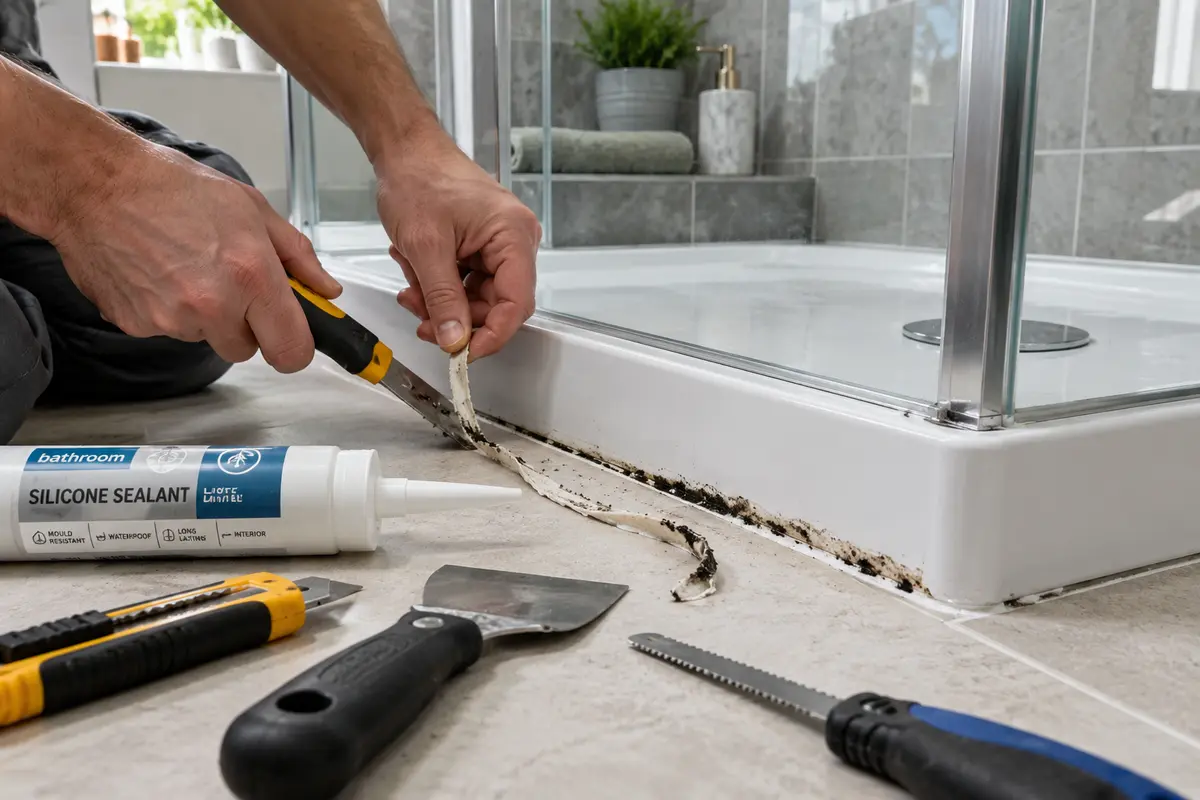
Grout or silicone: which one has gone black
A shower relies on two materials that fail in different ways. The grout between the tiles is rigid, porous cement. The silicone bead in the corners and along the tray or bath is flexible, and it is made with a fungicide that runs out.
So look at where the black mould sits: on the bead beside pale grout, in the grout lines themselves, or both. Then drag a key along a few joints. Grout that stays hard is sound whatever its colour, and grout that scratches out as sand, has cracked or has worn below the tile edges has failed.
If you rent, only the cleaning step below is normally yours. Dubai's tenancy law puts repairs on the landlord, and the section for tenants covers what to send.
Four fixes, from a scrub to a regrout
The fixes run from least to most disruptive, and each reaches something the one before it cannot: the surface film, the pores of sound grout, the whole bead, then the grout to most of the tile's depth.
Cleaning what sits on the surface
Fresh black mould on sound grout or a young bead often grows in a film of soap residue that a mould spray, a stiff brush and a rinse will lift.
- What it fixes: black that lifts off completely.
- What it cannot fix: mould in the pores of the grout or inside the bead. The United States Environmental Protection Agency warns that mould in porous materials may be impossible to remove completely.
- Time to move on: the black is back within weeks, or a grey shadow stays in the joint.
- Yourself or a pro: yourself.
Never mix a bleach spray with anything containing ammonia or acid, vinegar and limescale removers included: Health Canada warns the mix releases toxic gas. Go easy on bleach along the silicone too, because sealant makers say chlorinated and grease-cutting cleaners strip the fungicide out of the bead.
Any clean lasts longer in a shower that dries between uses, so check the extract fan pulls a sheet of toilet paper flat against its grille. If black is spreading across painted walls too, see mould on walls and around the AC.
Sealing grout that is still sound
A penetrating sealer soaks into cement grout and cuts how much water it takes up. Test first with a few drops of water on a clean, dry joint: if they soak in and darken it, a sealer has work to do, and if they bead, another coat adds little.
- What it fixes: water soaking into sound grout, which is what lets mould back in after a clean.
- What it cannot fix: mould already in the joint, which it would seal in, or cracks and sandy grout, which it has nothing to fill.
- Time to move on: the grout is stained right through, crumbles, or blackens again within weeks of a fresh coat.
- Yourself or a pro: yourself. Brush it on, wipe the surplus off the tiles, and keep the shower dry for the 12 hours the sheets ask.
Mapei's data sheets expect a basic grout sealer to need recoating every one to three years and claim up to 15 for the premium version, and say harsh, acidic or high-alkaline cleaners shorten both. The same sheets set an application range of 10–26°C, so in a Dubai summer cool a shut-up bathroom with the air conditioning first.
Cutting out the silicone and running a new bead
Sealant makers say the fungicide in sanitary silicone falls over time and leaches out with water, faster under aggressive cleaners. Once mould has grown into the bead, the black is inside the silicone, and the bead has to come out.
- What it fixes: black inside the bead, and a bead that has split or pulled away.
- What it cannot fix: anything in the grout.
- Time to move on: the new bead blackens quickly while the grout beside it fails, or it splits at the same spot again.
- Yourself or a pro: a careful owner can. Remove every trace of the old bead, wipe off the residue with methylated spirit and seal onto a dry surface, since new silicone will not bond to old. Fill a bath with water first and leave it full while the bead cures.
A bead that keeps splitting at one point, or a tray that flexes underfoot, points to movement underneath. Stop there and have a professional check what the tray is bedded on.
Raking out and regrouting
When the grout itself has failed, it has to be cut out. Mapei's data sheet for a standard cement grout asks for two-thirds of the tile's depth to be left open for new grout, so on a wall tile 9 mm thick that means clearing about 6 mm from every joint. A skim over the old surface falls well short of that.
- What it fixes: porous, stained, cracked or washed-out grout in one go, with the silicone redone in the same visit.
- What it cannot fix: loose tiles, or failed waterproofing behind them. Even epoxy grout is no replacement for a waterproofing membrane, as its own data sheet says.
- Time to move on: if new joints crack along the same lines, or water shows up outside the shower, the problem is under or behind the tiles.
- Yourself or a pro: usually a pro. Raking a whole shower to depth is slow, a power tool can chip the glaze, and new grout must be packed and cleaned within a short working window. Book a grouting and sealing contractor for the regrout and new silicone together.
Cases where the order changes
The order assumes cement grout, a steady tray and dry walls behind the tiles. These cases change it.
- Only the silicone is black. Go straight to a new bead. Sealing the grout does nothing for it.
- The grout is epoxy. It never needs sealing. Mould can still grow where soap and damp collect on it, its maker notes, and that surface film cleans off.
- The cracked grout runs along an internal corner or the tray or bath edge. That joint should never have been grout. The tile industry's movement-joint method, TCNA EJ171, calls for a flexible sealant wherever tile changes plane, so regrouting that line only cracks again.
- A tile moves, sounds hollow or cracks across its face. That is a bond failure and a different repair, covered in why tiles crack or sound hollow.
- Water shows up outside the shower, as a stain on the ceiling below or damp beyond the wall. See leaks into the flat below for the first steps and who pays.
- The flat was handed over less than a year ago. Law No. 6 of 2019 (Article 40) keeps a Dubai developer liable for a year from handover for defective installations, sanitary ones included. Whether a shower seal counts is left open, and your sale and purchase agreement often settles it. Report it to the developer before paying anyone.
If you rent the flat
Routine cleaning is yours: Dubai's tenancy law, Law No. 26 of 2007, asks a tenant to maintain the property as an ordinary person would maintain their own. Article 16 makes the landlord responsible for maintenance and repairs unless the contract says otherwise, and grout or silicone that blackens again after a proper clean normally falls there.
Article 19 bars tenants from carrying out maintenance works without the landlord's permission. Send photos, the dates you cleaned and how quickly the black came back, and ask for the repair in writing.
What a proper regrout visit includes
Most of what makes a regrout last happens before the new grout goes in and is hidden afterwards. A careful contractor works in this order.
- The old silicone comes out first, all of it. The bead is cut out, the residue wiped off with solvent, and the edges left bare and dry.
- The grout is raked out to depth. Two-thirds of the tile's thickness is cleared along every joint, without chipping the tile edges.
- Corners and the tray or bath line are cleared and left for sealant.
- The joints are cleaned and dried. Data sheets want them free of dust and standing water but give no drying time, which depends on how wet they got and how the room ventilates. Skipping that shower the evening before helps.
- The grout is packed full and the haze buffed off in time, within the one to two hours that grout allows. Left longer, it hardens into a film.
- The silicone goes in last. A bath is filled with water first and left full while the bead cures.
- Sealer, if the grout needs it, goes on at least 48 hours later. Some current cement grouts need none, so ask whether yours does.
Cement or epoxy for the new joints
Cement grout is forgiving to lay and easy to patch, but it stays porous, so the joints that stay wet longest go black first.
Epoxy is non-porous, never needs sealing and, once cured, resists stains and household cleaners. It costs more and is less forgiving of the installer, because the surplus must come off the tiles before it sets: Laticrete's data sheet gives 80 minutes of working time at 21°C and 30 minutes at 35°C. In a Dubai summer, keep the air conditioning on for the visit and ask where the installer will mix, since a bucket left in a hot van loses more than half that time.
If the bathroom has no window or the shower rarely dries between uses, and the installer has laid epoxy before, pay for epoxy. Otherwise, a good cement grout packed to full depth is the safer choice.
How long the shower is out of use
Silicone usually sets the pace. Sanitary silicone can shrug off a splash after about two hours, but it cures inwards at 2–3 mm a day (Bostik's figure), which leaves a 6 mm joint soft inside the next morning. UniBond tells you to leave a bath at least 48 hours.
Mapei's cement grout keeps a residential shower out of use for 24 to 48 hours and wants 21 days before regular cleaning: for the first three weeks, use water and a soft cloth. Laticrete's epoxy resists household cleaners only after seven days.
For a cement regrout with new silicone, plan on about two days without that shower, plus 12 dry hours if a sealer follows.
Signs the regrout was rushed
Once the silicone has cured, walk the shower and look for these.
- A double edge on the silicone, or black showing through white: new silicone went over the old.
- Hard grout in the corners or along the tray or bath, where a fingernail should find flexible sealant.
- Old colour at the joint edges, or hairline cracks along the new grout within weeks: consistent with a skim over the old grout.
- Pinholes or dips along a joint: usually a sign the grout was not packed full.
- A dull film on the tiles: haze left past its cleaning window.
- Being told to shower that evening. The data sheets ask for one to two days.
Write any snag as the fix you want. "The new silicone at the tray was laid over the old bead; please cut both out and reseal" gets a clearer answer than "the silicone looks wrong".
Quotes for the same shower vary with the size of the enclosure, cement or epoxy, whether the corners are recut for sealant and whether sealing is a second visit. Everlook lets you compare offers from licensed UAE contractors for shower regrouting and resealing side by side before you commit, so ask each one to state the rake-out depth, the product and the cure time.
Find your next pro on Everlook
Post a job in minutes and get offers from trusted local contractors. Free to start.
Find your next pro on Everlook
Post a job in minutes and get offers from trusted local contractors. Free to start.
Get started